
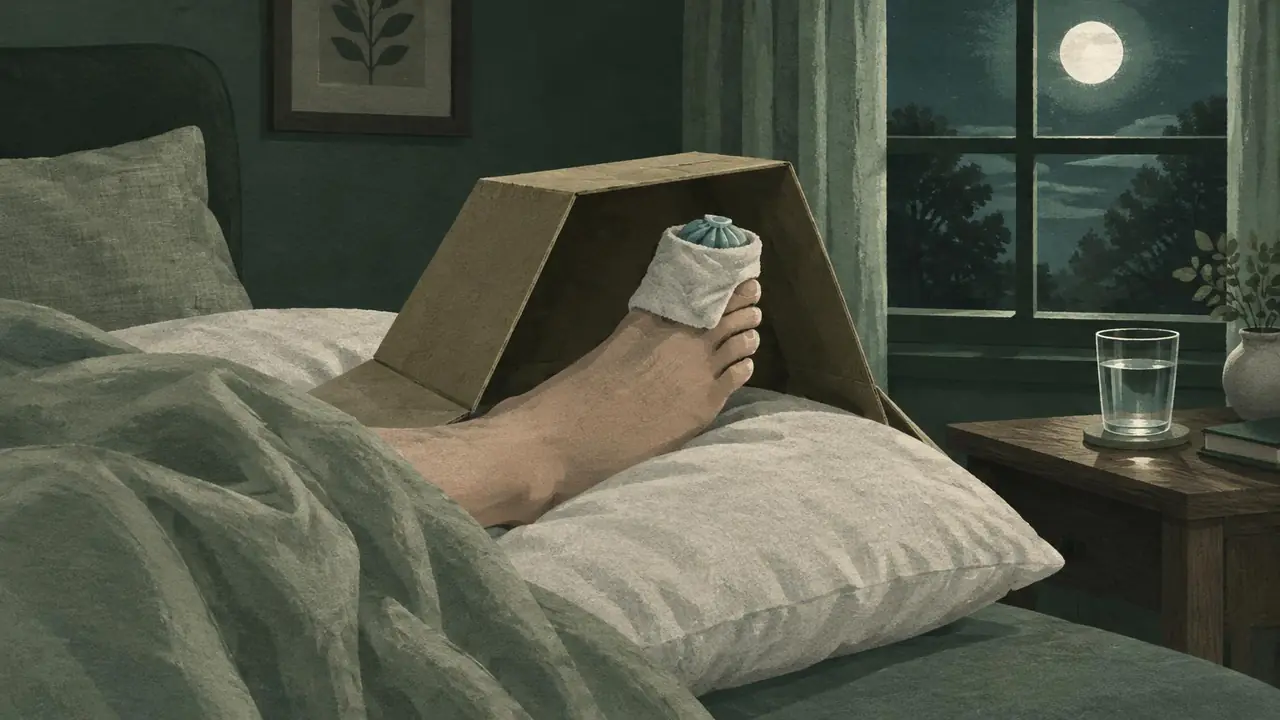
1. Start early
Flare treatment works best when it starts as soon as possible — ideally within the first 24 hours. If your doctor has given you a flare plan or medication to keep on hand, this is the moment to use it exactly as prescribed.
2. Rest, elevate, cool
Rest the joint and keep it raised. The NHS suggests a cold pack (or a bag of frozen peas wrapped in a towel) for up to 20 minutes at a time. Keep bedding off a sore toe — a chair at the end of the bed or a frame helps.
Cold, wrapped
Ice pack or frozen peas in a thin towel, about 20 minutes, then a break. Never straight on skin.
Hot soaks
Heat feels like it should help, but it can feed the swelling of an inflamed joint. Skip the hot foot bath tonight.
3. Drink water, skip alcohol
Staying well hydrated helps your kidneys clear uric acid. Avoid alcohol and sugary drinks while the flare settles.
4. Don't stop long-term medication
If you already take a urate-lowering medicine such as allopurinol or febuxostat, the ACR guideline recommends continuing it during a flare. Stopping or starting it on your own can make things worse — ask your doctor before changing anything.
When to get help fast
Contact a doctor urgently if you have a fever or feel generally unwell, the joint is very hot and red, it's your first ever flare, or pain isn't improving. A hot swollen joint with fever can be an infection, which needs treatment the same day.